Catch Aliens, Map the World's Sidewalks
summary
Part 1 of our series exploring the subnets powering BitRobot. First up: SN/01: ET Fugi, where players hunt alien fugitives while building one of the world’s largest open sidewalk navigation datasets.
update begins
BitRobot is the world’s open robotics lab — a global network where contributors accelerate robotics R&D together.
Inside the lab are specialized departments called subnets, each focused on a different robotics mission. Some collect navigation data. Others gather teleoperation demonstrations, egocentric video, or simulation data for embodied AI.
This series takes you inside those departments, starting with ET Fugi.
The entry point: your own robot
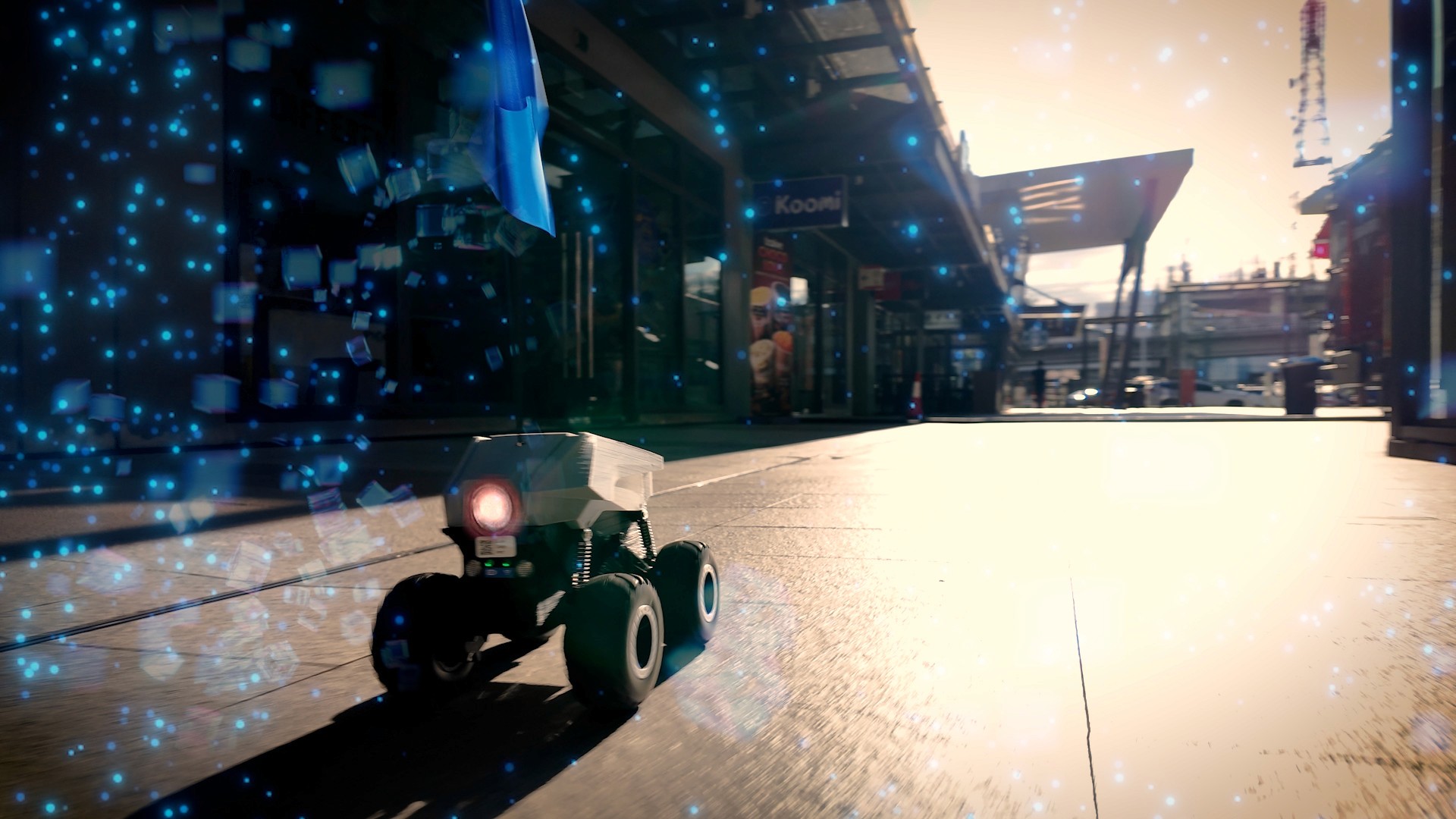
The first step into ET Fugi isn’t downloading a game, it’s deploying a robot. The EarthRover Mini+ is a compact sidewalk robot from FrodoBots that costs $349 and ships worldwide. Once connected to ET Fugi game, it can be remotely operated from anywhere with an internet connection, allowing anyone to contribute real-world navigation data while earning rewards through the BitRobot ecosystem.
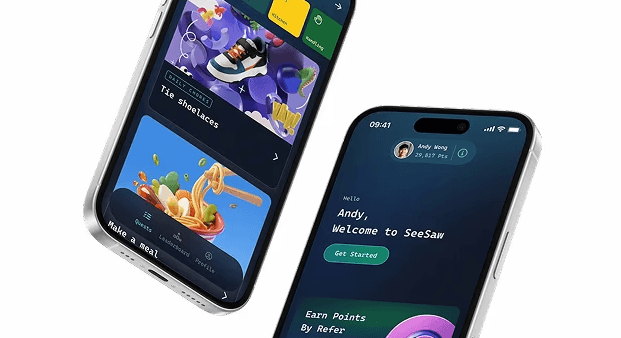
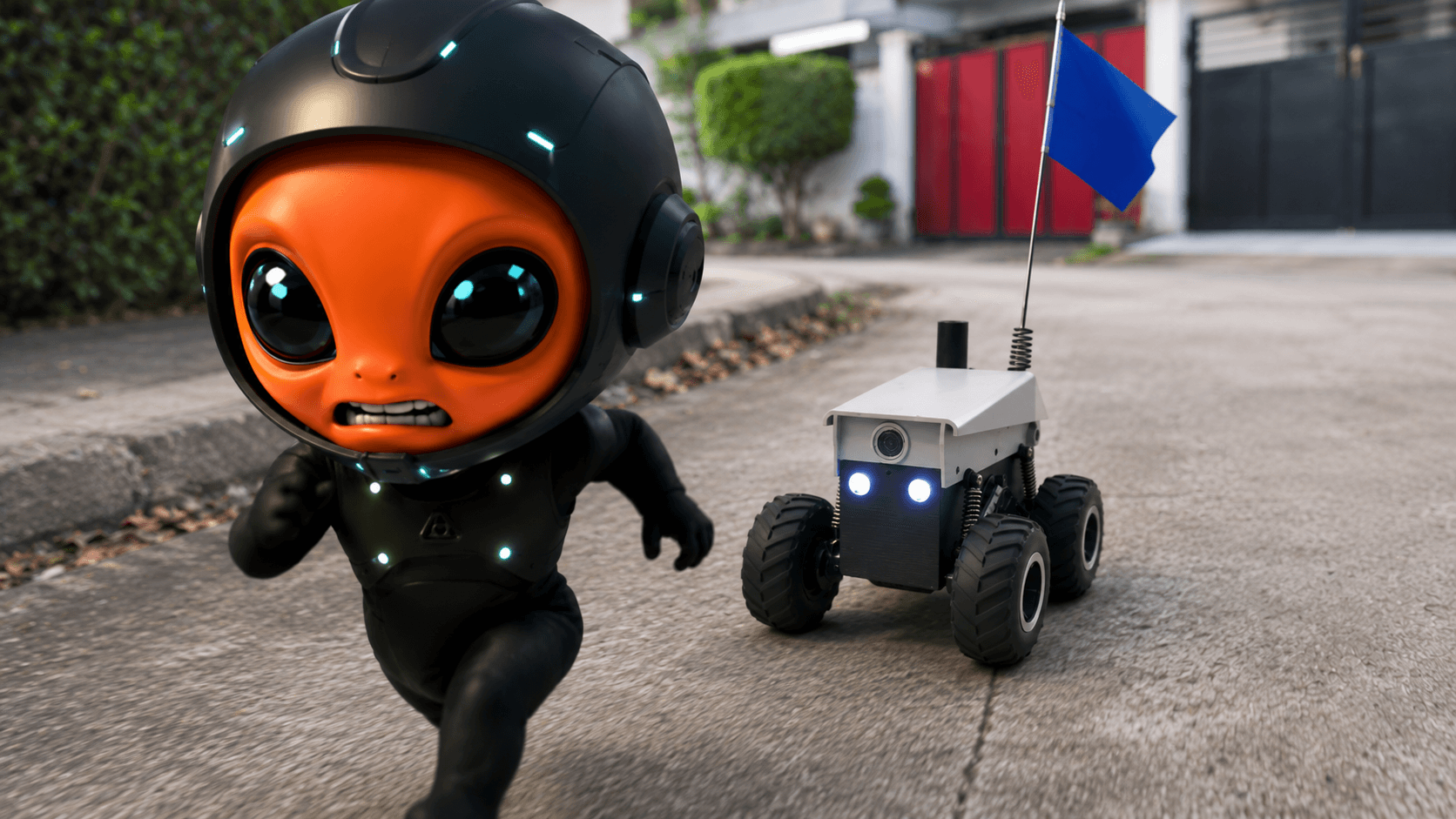
On the surface, ET Fugi feels like a game. Players drive their rover through real neighborhoods searching for virtual alien fugitives hidden throughout the map.
Underneath, every mission captures valuable robotics data: sidewalks, crosswalks, pedestrians, bicycles, weather, lighting conditions, and countless edge cases that autonomous robots must eventually learn to navigate. Every drive contributes to one of the world’s largest open sidewalk navigation datasets while earning rewards through the BitRobot ecosystem.
Pokémon GO proved that AR gameplay can generate valuable real-world data. ET Fugi expands on that model: contributors don’t just play, they’re recognized and rewarded for creating the data that powers the next generation of robots.
From game to robotics research
The value of this data isn’t hypothetical. Researchers are already building on it.
In October 2024, BitRobot released FrodoBots-2K, one of the first large-scale open datasets of real-world sidewalk robot trajectories collected through ET Fugi. The dataset was made publicly available on Hugging Face, allowing anyone to study, benchmark, and build upon it.
That release became the foundation for the inaugural Earth Rover Challenge, an international navigation competition where research teams developed autonomous navigation policies for real-world sidewalk robots. The challenge culminated in the paper Earth Rover Challenge: Benchmarking Vision-Language-Action Models for Real-World Robot Navigation, published at ICRA 2025.
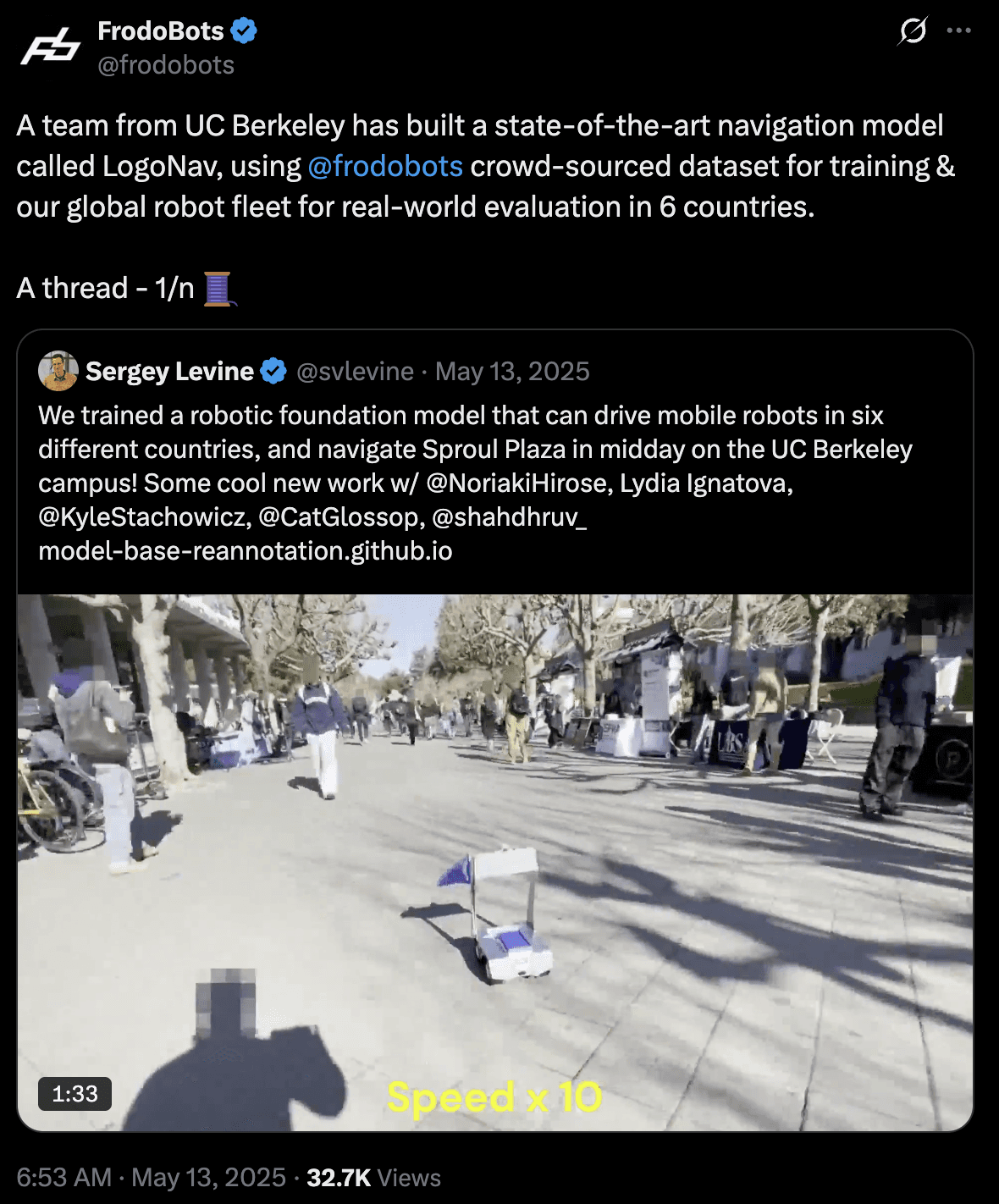
The dataset also found its way into research from Sergey Levine’s lab, whose work ultimately led to the founding of Physical Intelligence. Their Model-Based Re-Annotation project further demonstrated that community-generated robotics data could support frontier embodied AI research.
Since then, the network has continued to grow. Working alongside researchers at UC Berkeley, BitRobot expanded the dataset to more than 7,000 additional rover episodes, creating what is now the largest open-source sidewalk navigation dataset available on Hugging Face.
This is exactly what BitRobot was designed to do. Instead of relying on one company or one university lab to collect robotics data, thousands of contributors around the world collectively generate datasets that advance research for everyone.
From player to robotics builder
Operating a rover is only one way to contribute. For developers who want to go further, the EarthRovers Agent SDK makes it possible to build your own navigation agents and deploy them directly onto your rover.
You can experiment with obstacle avoidance, autonomous navigation policies, visual tracking, or entirely new approaches to robot intelligence using the same hardware contributing data to the network.
It creates a more approachable path into robotics. You don’t need a university lab or a research grant to begin building autonomous robots, you just need a rover, an idea, and a willingness to experiment with the agent kit. Check out some of the rover functions that the SDK can support in the video below and the SDK page here: https://bitrobot.ai/miniplusagentkit
One department inside a much larger lab
ET Fugi is just one department inside the world’s open robotics lab. Other departments are already operating across teleoperation in simulation, egocentric data collection, and other frontier robotics tasks. More will continue opening as the BitRobot Network expands.
Soon, we’ll also open the front doors to the BitRobot Lab — our unified rewards portal where anyone can explore every subnet, track contributions across the network, earn BitRobot Bolts, unlock badges and access levels, and discover new ways to participate.
The BitRobot Lab is where every department comes together. Whether you’re driving robots through city streets, collecting teleoperation demonstrations, building navigation agents, or contributing to future robotics challenges, your work will be recognized in one place.
If you’re joining ET Fugi today, you’re getting in before those doors officially open. Your contribution history starts now. And when the BitRobot Lab launches, you’ll already have an access card recognizing your early contributions.
Get Started
Purchase and Deploy an EarthRover Mini+
Play ET Fugi and Earn
Build with the EarthRovers Agent SDK
Explore the FrodoBots sidewalk navigation datasets:
- 2K Dataset
- 7K Dataset
Other publications
explore more